

On This Page
Quick Answer
Attendance device replacement check planning establishes which employees and pending time records may be affected when a clock is changed. Record the old device reference, proposed replacement and responsible site owner. Ask the supplier how records will be transferred or reconciled rather than assuming every device uses compatible identifiers or connection methods.
Key Takeaways
- Define the replacement boundary. List the employee identifiers expected on the replacement device.
- Test the employee mapping. Compare the test employee reference at the device and receiving process.
- Accept the first reviewed period. Reconcile the transition period before declaring the replacement accepted.
- Keep approval evidence. Record the accepted result, responsible owner and unresolved questions before changing live records.
Attendance device replacement check: define the replacement boundary
Attendance device replacement check planning establishes which employees and pending time records may be affected when a clock is changed. Record the old device reference, proposed replacement and responsible site owner. Ask the supplier how records will be transferred or reconciled rather than assuming every device uses compatible identifiers or connection methods.
Use the Attendance Software product guide to frame the demonstration. Verify the proposed configuration against the approval evidence described here.
- List the employee identifiers expected on the replacement device.
- Identify any time records still awaiting review from the old device.
- Agree the replacement window and the site contact for staff questions.
Test the employee mapping
Use authorised test records to check that the proposed replacement associates an attendance event with the intended employee. Review the event time and the downstream employee reference together. Do not assume that successful device installation proves that employee matching, time settings or the proposed connection to attendance processing are correct.
Check the employee records behind each decision before changing downstream results.
- Compare the test employee reference at the device and receiving process.
- Check the event time against the approved site time setting.
- Ask the supplier to explain how uncertain or duplicate records are reviewed.
Accept the first reviewed period
Keep the old and replacement device records distinguishable until the responsible owner has reviewed the transition period. Investigate missing or repeated events before releasing accepted inputs downstream. Device acceptance is a technical and operational decision; any employee pay effect still requires separate review against applicable employer rules and legal obligations.
Connect accepted inputs to payroll compliance, with legal interpretation and statutory approval remaining with the responsible employer team.
- Reconcile the transition period before declaring the replacement accepted.
- Obtain approval before retiring equipment that still contains needed records.
- Handle personal information on retired equipment through an approved disposal process.
Worked example: swapping a failed device
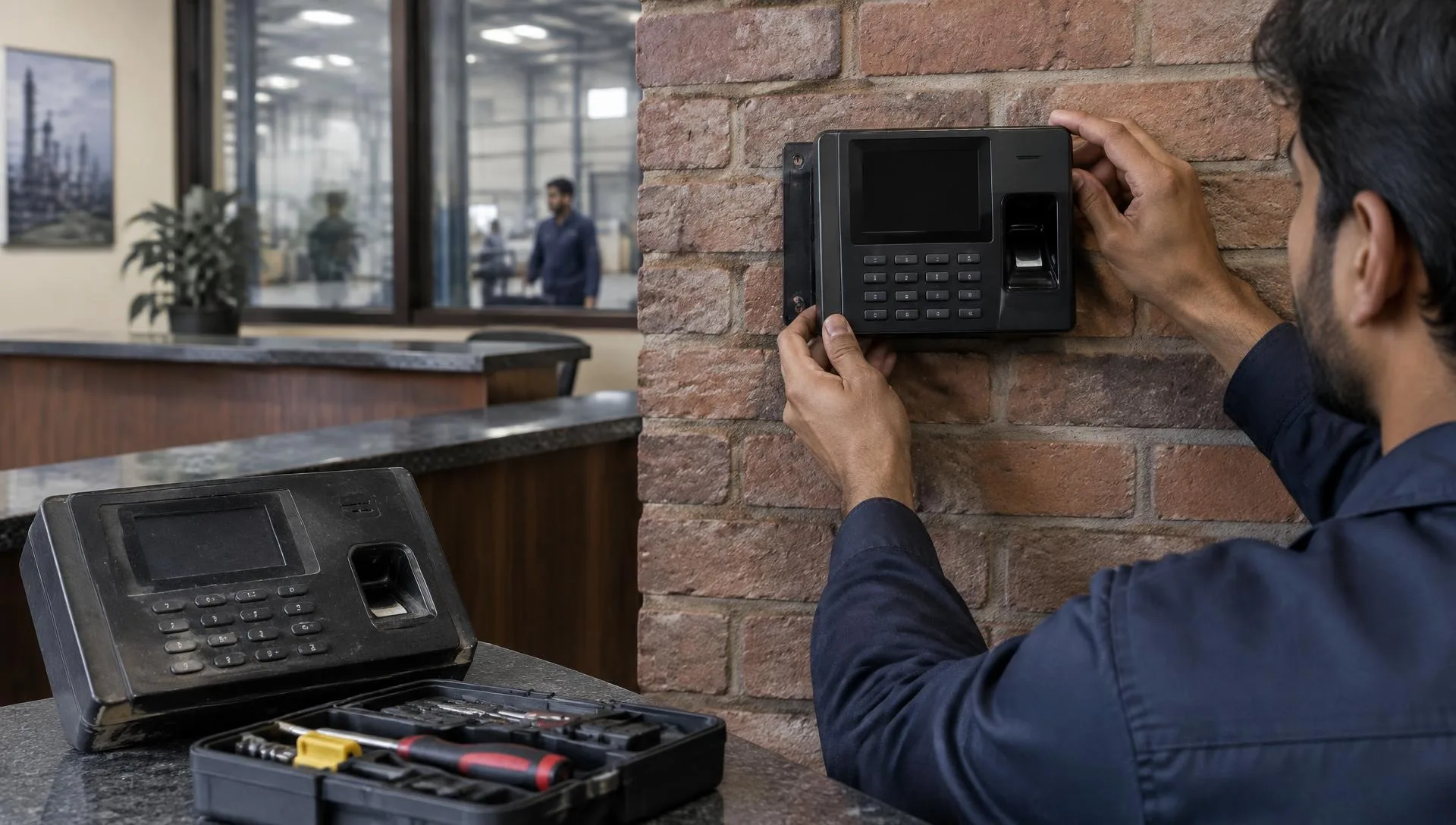
When a device fails, plan the swap so no attendance is lost. Export pending records, install the replacement, re-enrol or transfer staff, and compare the first days of records with rosters.
- Export pending records
Save records still on the old device.
- Install the replacement
Set the correct time and location.
- Transfer enrolments
Move or re-enrol staff and check the mapping.
- Compare first days
Match records with rosters for the first week.
| Finding | Likely cause | Action |
|---|---|---|
| Gap in records | Old device data lost | Use roster and supervisor confirmation |
| Wrong time | Clock not set | Resynchronise |
| Staff not recognised | Enrolment not moved | Re-enrol |
Keep a spare device plan for critical sites. It shortens the gap when hardware fails.
Summary
Make the process specific to your employees and approved working rules. Reconcile the transition period before declaring the replacement accepted. Keep supplier verification, legal review and payment authorisation distinct so a successful demonstration is not mistaken for final employer acceptance.
Next step: see how this works in PayPeople Attendance Software.
Frequently Asked Questions
What should the team establish first?
Attendance device replacement check planning establishes which employees and pending time records may be affected when a clock is changed. Record the old device reference, proposed replacement and responsible site owner. Ask the supplier how records will be transferred or reconciled rather than assuming every device uses compatible identifiers or connection methods. List the employee identifiers expected on the replacement device.
What practical check belongs in the initial review?
Attendance device replacement check planning establishes which employees and pending time records may be affected when a clock is changed. Record the old device reference, proposed replacement and responsible site owner. Ask the supplier how records will be transferred or reconciled rather than assuming every device uses compatible identifiers or connection methods. Identify any time records still awaiting review from the old device.
How should the records be tested?
Use authorised test records to check that the proposed replacement associates an attendance event with the intended employee. Review the event time and the downstream employee reference together. Do not assume that successful device installation proves that employee matching, time settings or the proposed connection to attendance processing are correct. Compare the test employee reference at the device and receiving process.
Which details need separate verification?
Use authorised test records to check that the proposed replacement associates an attendance event with the intended employee. Review the event time and the downstream employee reference together. Do not assume that successful device installation proves that employee matching, time settings or the proposed connection to attendance processing are correct. Check the event time against the approved site time setting.
What is needed before final acceptance?
Keep the old and replacement device records distinguishable until the responsible owner has reviewed the transition period. Investigate missing or repeated events before releasing accepted inputs downstream. Device acceptance is a technical and operational decision; any employee pay effect still requires separate review against applicable employer rules and legal obligations. Reconcile the transition period before declaring the replacement accepted.
What should happen after a change?
Keep the old and replacement device records distinguishable until the responsible owner has reviewed the transition period. Investigate missing or repeated events before releasing accepted inputs downstream. Device acceptance is a technical and operational decision; any employee pay effect still requires separate review against applicable employer rules and legal obligations. Obtain approval before retiring equipment that still contains needed records.
Does software establish legal compliance by itself?
No. Software output does not establish that an employer has selected the correct legal rules or applied them to the right employees. Confirm establishment coverage, effective dates and relevant requirements with the responsible adviser. Keep that approval separate from evidence that the configured workflow produced the expected result.
How should a supplier demonstration be evaluated?
Bring representative cases and ask the supplier to explain each input, result and unresolved limitation. Record what was demonstrated rather than relying on a general assurance. Assign owners to outstanding questions and obtain the relevant approval before using the proposed process for live employee records or payroll decisions.
Sources
- Pakistan Code: verify applicable legislation and amendments (opens in a new tab)
- Punjab Laws: verify establishment coverage and current requirements (opens in a new tab)
Feature details are checked against PayPeople’s product pages and help guides. Laws and settings change; confirm current rules with the official source.