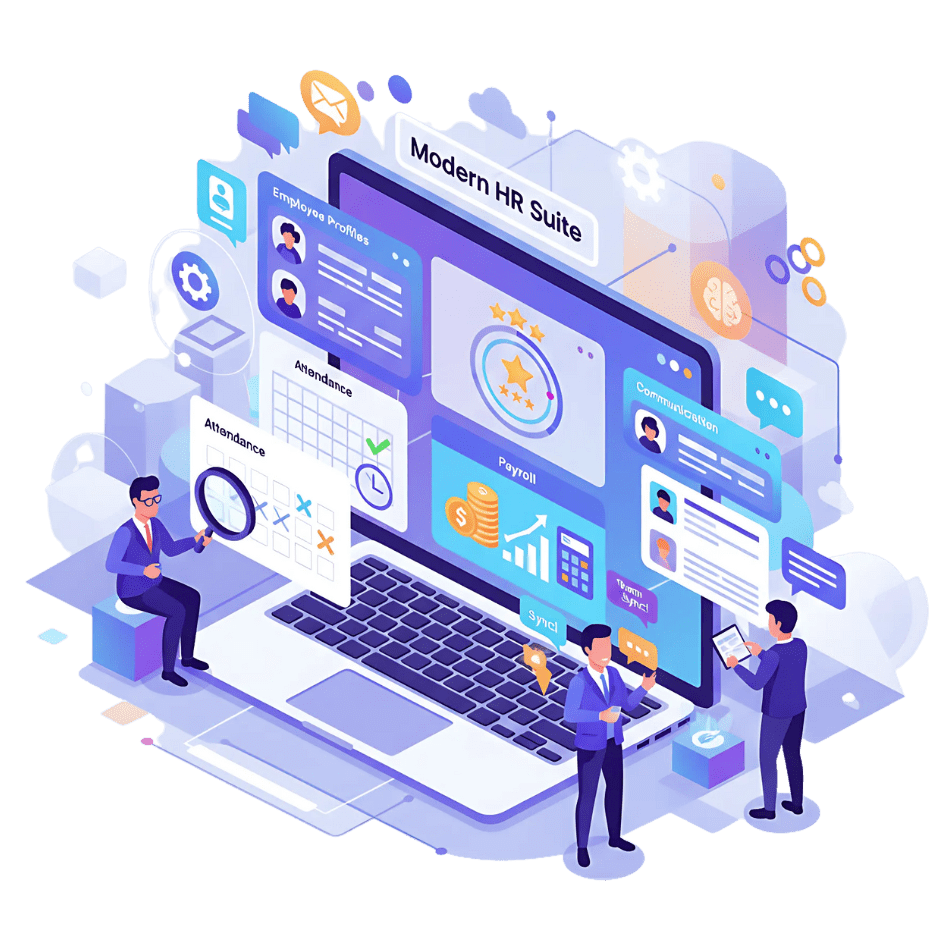
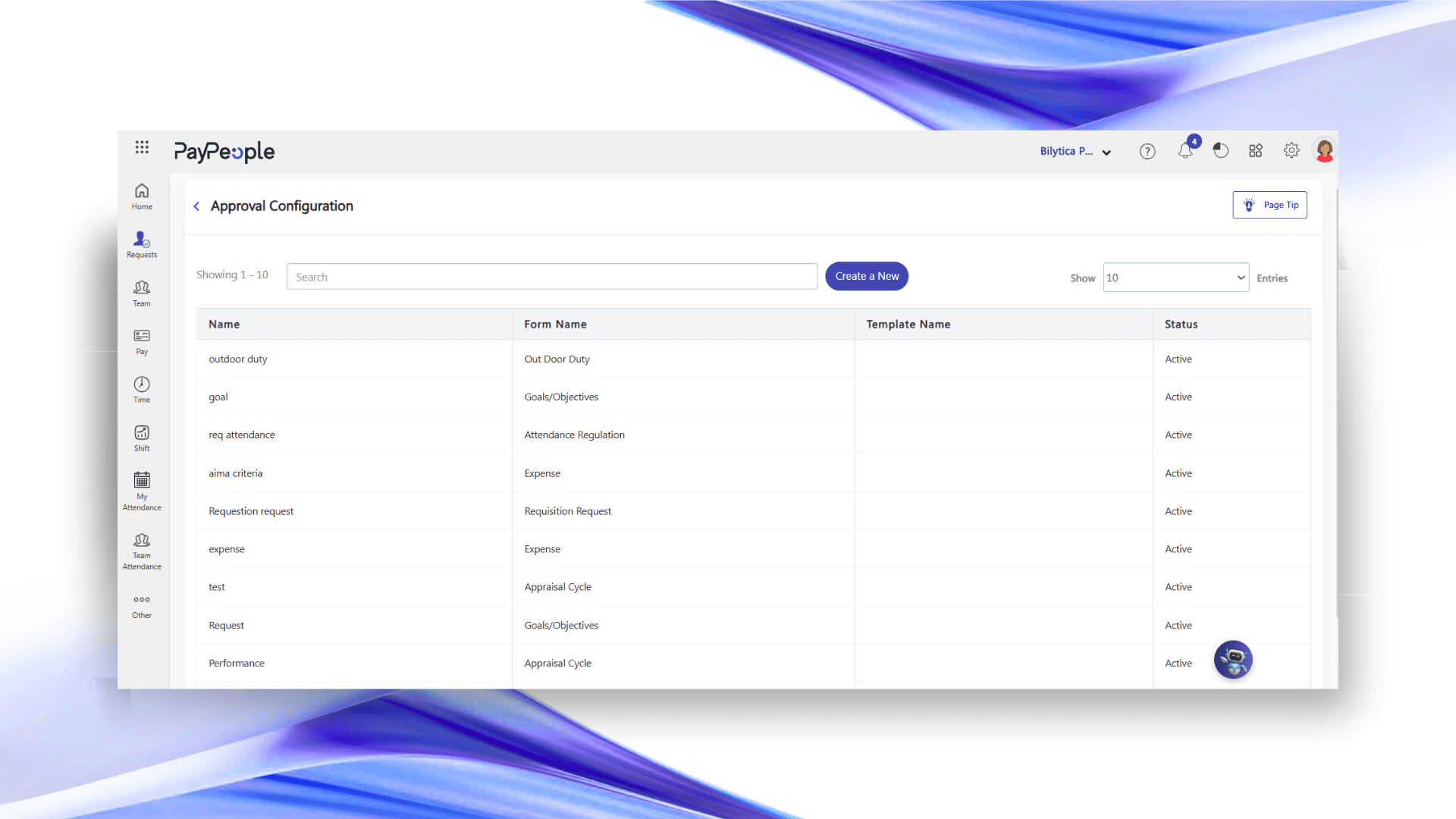
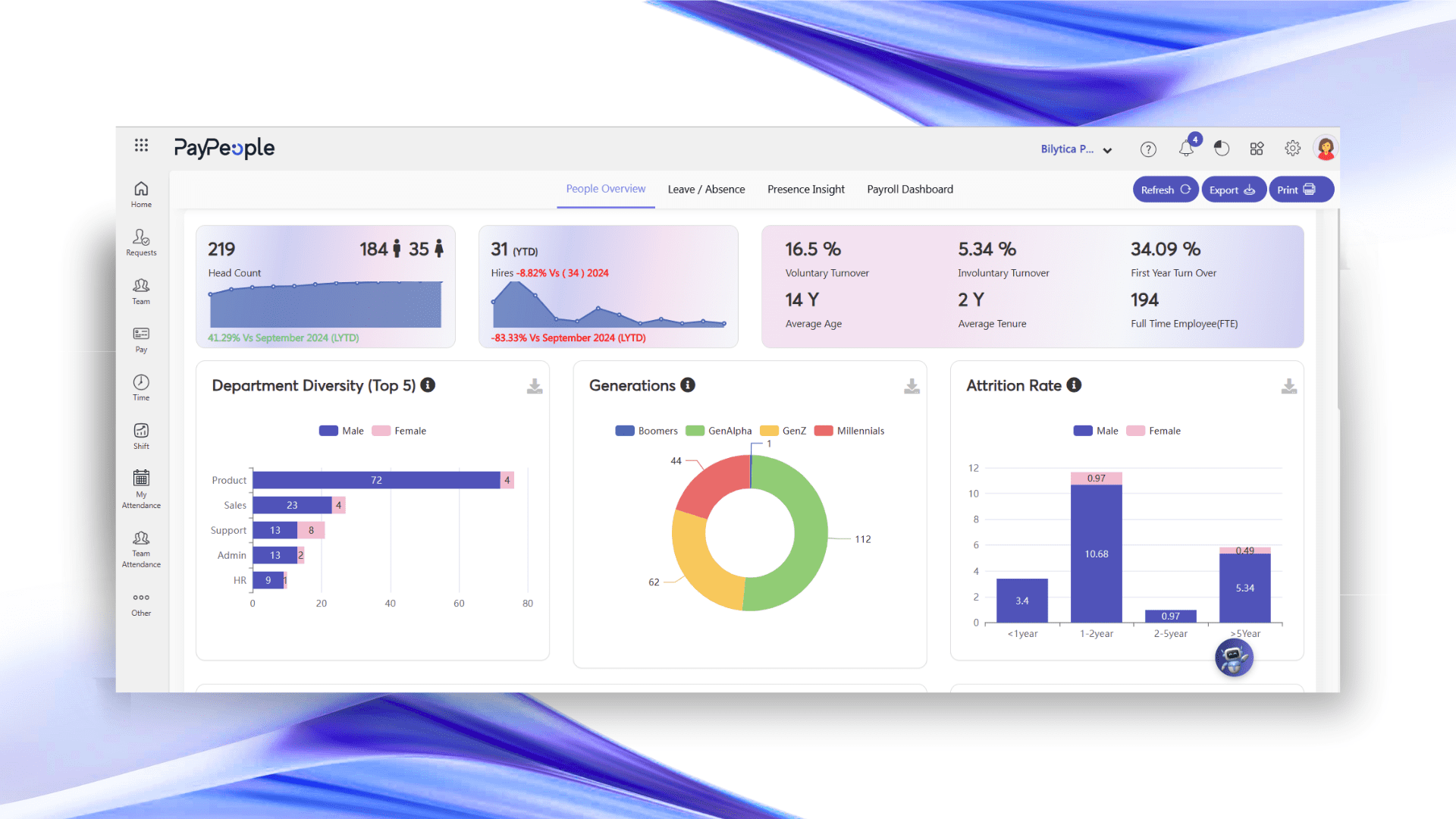
HR software — also called an HRMS (Human Resource Management System) — is a platform that centralises all people operations into one system. Employee records, payroll, attendance, leave, performance, and documents are managed from a single place instead of scattered across spreadsheets, email threads, and separate tools. For Pakistani businesses, this means one system handling FBR tax compliance, EOBI contributions, multi-city workforce data, and employee self-service simultaneously — without a separate tool for each.
HRIS vs HRMS vs HCM — in plain terms:
- HRIS — stores employee data and handles basic records
- HRMS — adds payroll automation, leave management, and performance workflows (what most Pakistani businesses need)
- HCM — extends into advanced strategic planning for large enterprises
PayPeople operates as a full HRMS with AI capabilities built on top.
Most Pakistani HR teams hit the same three walls as headcount grows past 50 employees:
- Compliance changes constantly. FBR income tax slabs, EOBI contribution rates, and SESSI/PESSI rules update with each annual budget. Manual reconfiguration of payroll after every budget cycle creates penalty risk.
- Small teams, large workforces. One HR Manager for 150 employees is not unusual in Pakistan. Without automation, that person spends the majority of their time on leave approvals, document requests, and attendance reconciliation — not on hiring or retention.
- Multi-city operations. Businesses with offices across Lahore, Karachi, and Islamabad cannot maintain separate HR records per city without version conflicts and reporting delays.
PayPeople replaces these three failure points with one connected platform: payroll and compliance calculations update automatically when regulations change, routine HR questions and approvals are automated through self-service and AI, and a single cloud system consolidates all locations into one live, reportable dataset — with branch-specific configurations where needed.
PayPeople provides an extensive HR management suite covering the employee lifecycle from recruitment to offboarding.
- Recruitment & Onboarding — job posting and tracking, automated hiring workflows, CV parsing, resume screening, JD matching, and onboarding → Recruitment
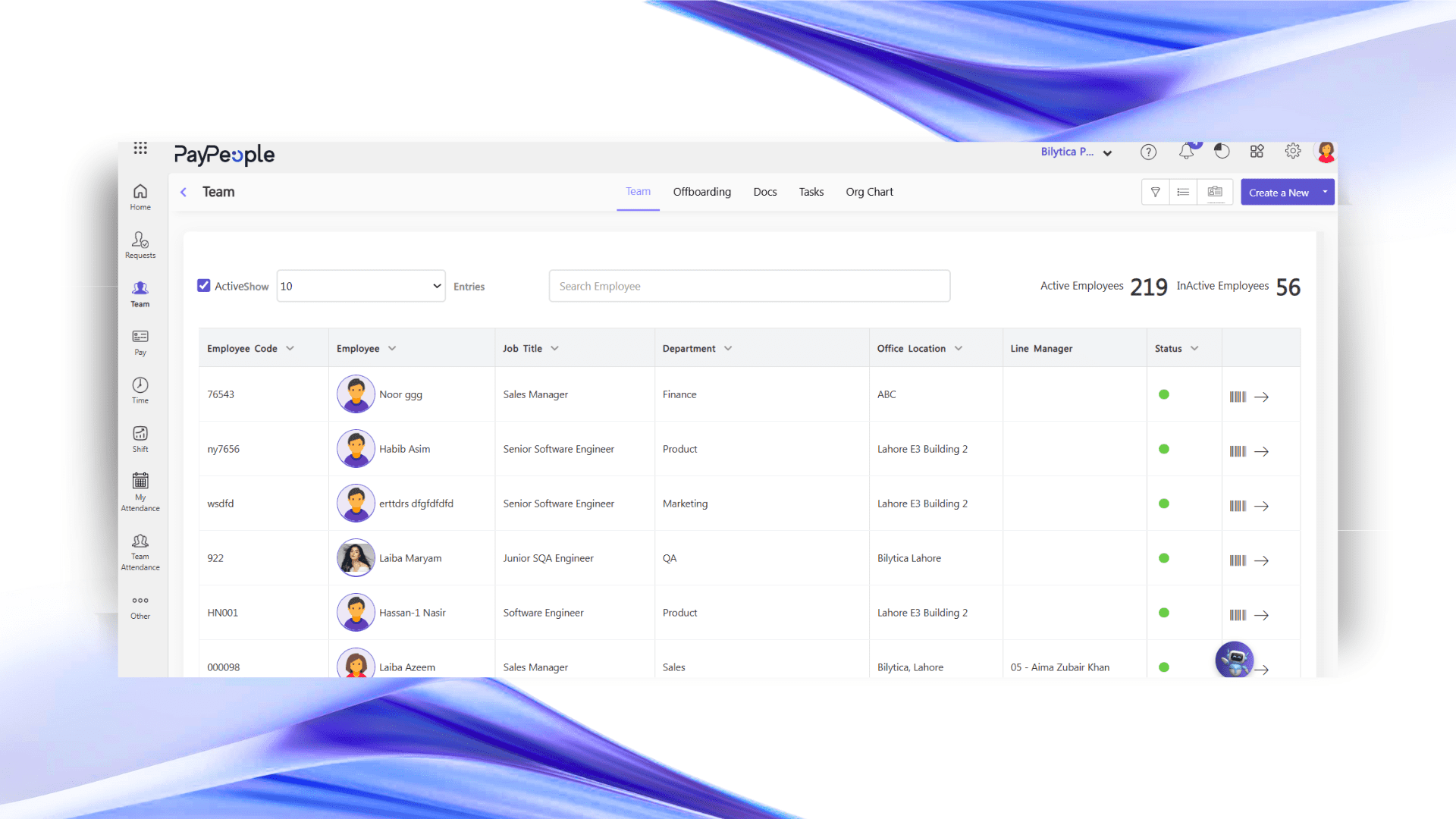
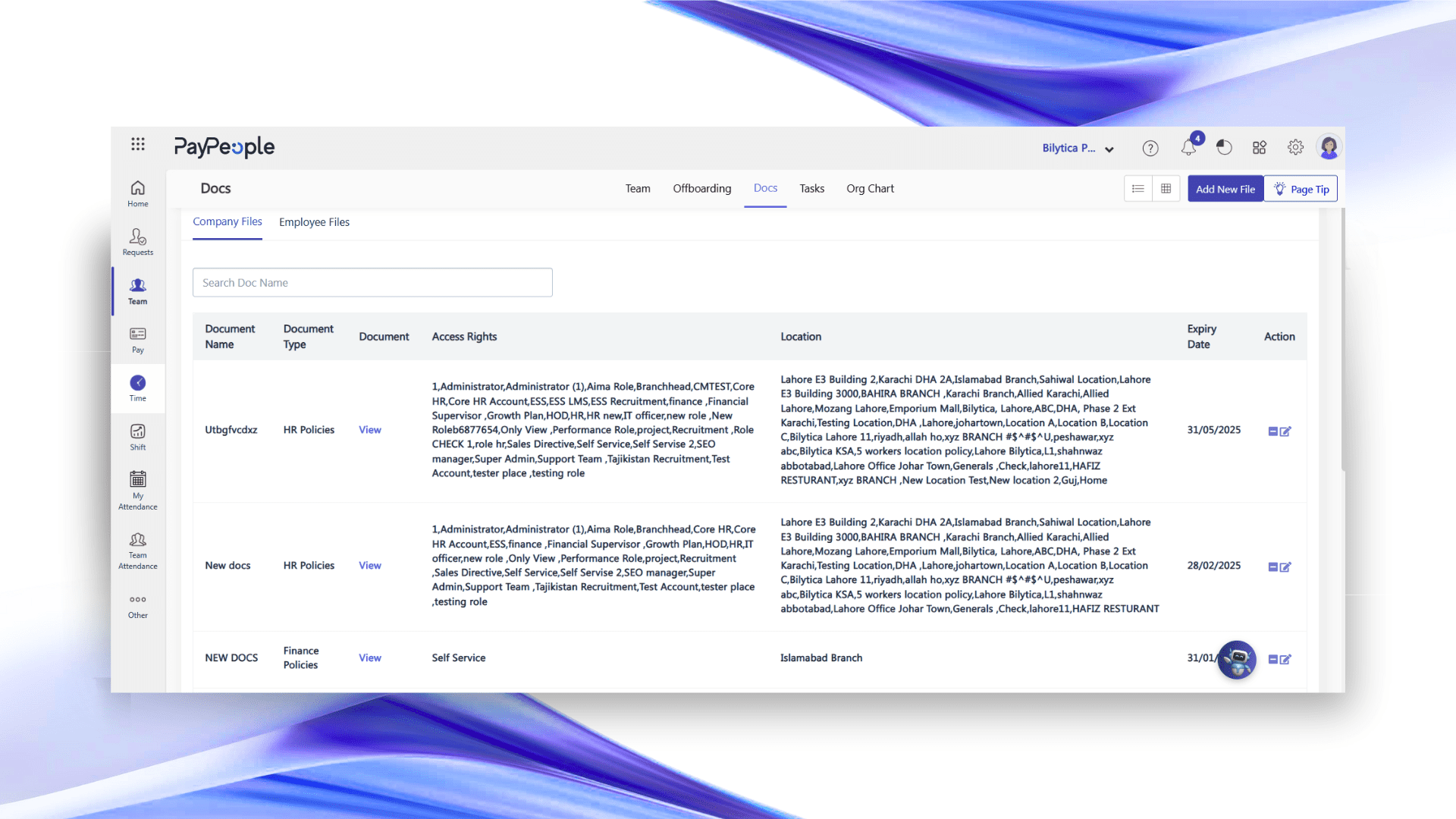
- Employee Management — centralised employee records, role-based access, and digital document management
- Time & Attendance — biometric and GPS tracking, shift and roster management, and attendance reporting → Time & Attendance
- Leave & Absence Management — custom leave policies, automated approvals, and real-time leave tracking
- Payroll Management — salary processing, tax calculations, payslips, overtime, and deductions→ Payroll Software
- Loan & Advance Management — employee loans, automated deductions, repayment schedules, and interest management
- Performance Management — goal setting, KPIs, OKRs, appraisals, and 360-degree feedback Performance & Careers
- Employee Self-Service — payslips, leave requests, profile updates, documents, HR information, and employee requests mobile app
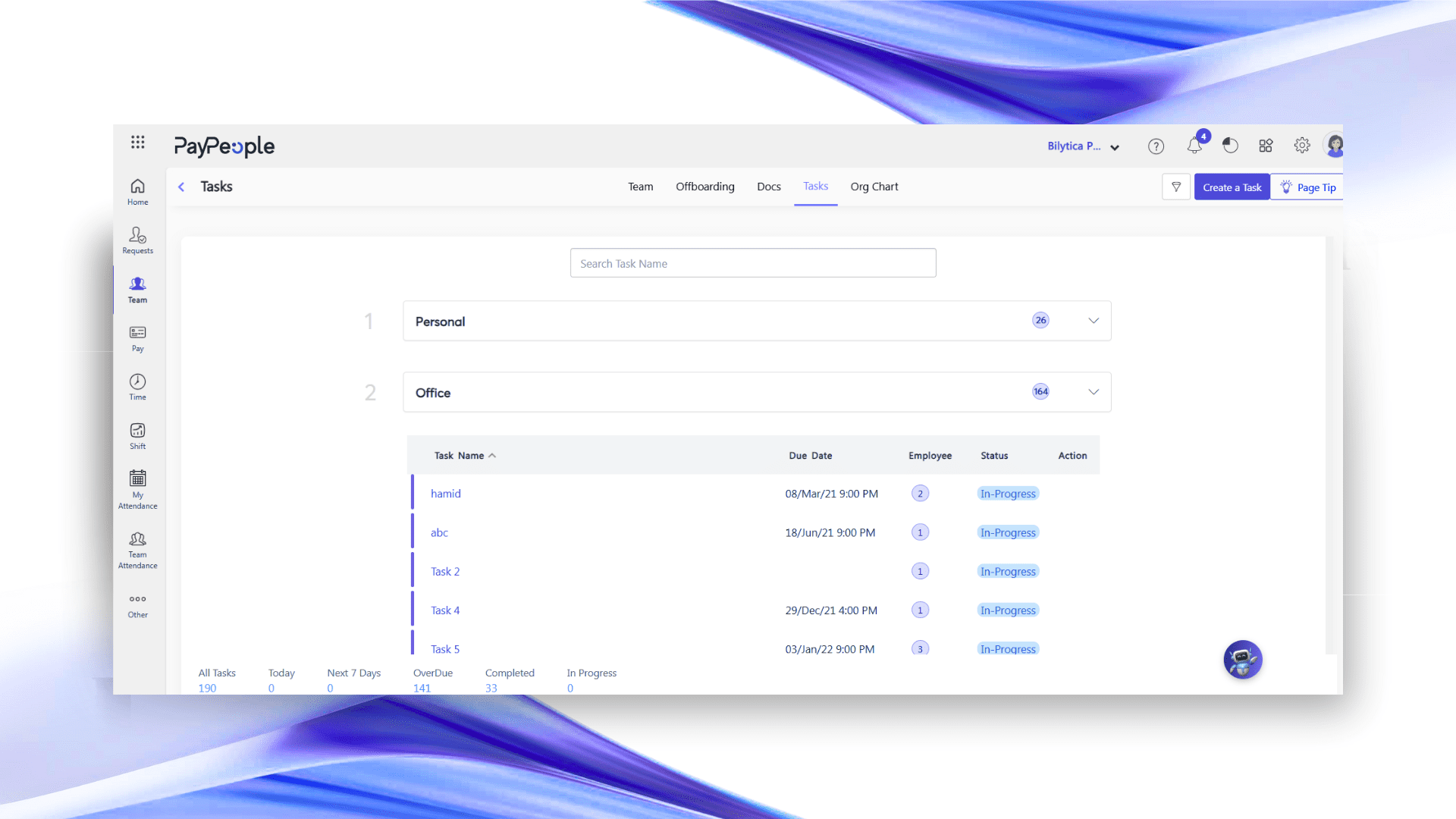
- Task Management — task assignment, deadlines, collaboration, and progress tracking
- Learning Management — training programs, courses, certification tracking, and skill development LMS
- Field Force Tracking — GPS-based attendance, remote workforce monitoring, and productivity reporting Mobile Tracking
- Offboarding & Final Settlement — resignation and clearance tracking, exit interviews, final settlements, and employee exit management Employee Onboarding
- Survey Management — employee surveys, engagement feedback, automated distribution, anonymous responses, and reporting
PayPeople also provides a mobile app for attendance, employee self-service, requests, salary slips, HR policies, notifications, and manager approvals.
PayPeople is Pakistan’s first AI-powered HRMS. AI operates as a practical tool across four functions — not a marketing label.
AI Buddy. A conversational assistant in the mobile app that answers employee questions — leave balances, payslip details, policy queries — instantly, without routing through HR. Reduces routine HR query volume significantly. → AI Buddy
AI Applicant Tracking. Reads incoming applications and ranks candidates against role requirements automatically. Shortlisting time drops from days to minutes for high-volume hiring. → AI ATS
AI Performance Management. Generates role-specific appraisal criteria, suggests KPIs and OKRs per job description, and produces AI-driven recommendations for bonuses and salary adjustments. → AI PMS
AI Learning Recommendations. Identifies skills gaps from performance data and recommends targeted training per employee — not the same content for everyone. → AI LMS
PayPeople structures the full employee journey — from hire to exit — as a single connected record, not a set of events managed in different systems.
Joining. When a candidate is hired through PayPeople’s recruitment module, their employee profile is created automatically. Onboarding tasks — document collection, system access, policy acknowledgements — are routed to HR, IT, and the line manager simultaneously with deadlines.
During employment. Role changes, salary revisions, department transfers, and asset assignments update the same profile. Every module — payroll, attendance, performance — reads from it automatically. No manual sync required.
Performance and development. Appraisal outcomes, OKR results, 360 review scores, and LMS completions attach to the employment record. HR sees the full picture in one place, not split across tools.
Exit. Offboarding tasks — asset return, access revocation, final settlement — run through the same task workflow system as onboarding. Nothing is missed because everything has an owner and a deadline.
Flagged for your review — see note at top of file.
- Small & Growing Businesses (SMEs) — typically feel the limits of spreadsheet HR between 30–80 employees. PayPeople scales module-by-module as headcount and complexity grow, without requiring a full platform switch later.
- Enterprises & Multi-Branch Businesses — need centralized workforce data across multiple cities, departments, and reporting hierarchies, with role-based access for large HR and finance teams.
- Multi-City Operations — companies with offices in more than one of Lahore, Karachi, or Islamabad get one shared platform instead of fragmented, city-by-city records.
This is the most common question from Pakistani businesses evaluating HR platforms.
Payroll Software processes salaries — gross-to-net calculation, FBR tax withholding, EOBI deductions, payslip generation, and bank disbursement. It is a financial and compliance process. Full detail is on the Payroll Software page.
HR Software manages people — records, documents, lifecycle events, workflows, and workforce analytics. It is an operational and people management process.
In PayPeople both live on the same platform and share the same employee database. Payroll reads the bank account, grade, and department that HR set up — without a separate record to maintain. They are distinct functions, not competing ones.