

In PayPeople LMS, the learner view refers to the interface and experience that learners encounter when accessing the platform to browse, enroll in, and participate in courses. It’s the perspective that learners have as they interact with the various features and functionalities within PayPeople LMS.
What is a Course Catalog?
In the context of a Learning Management System (LMS) like PayPeople LMS, the “learner view” in the course catalog refers to the interface or perspective that learners see when browsing and accessing courses within the catalog. It’s essentially how courses are presented and navigated from the perspective of a learner.
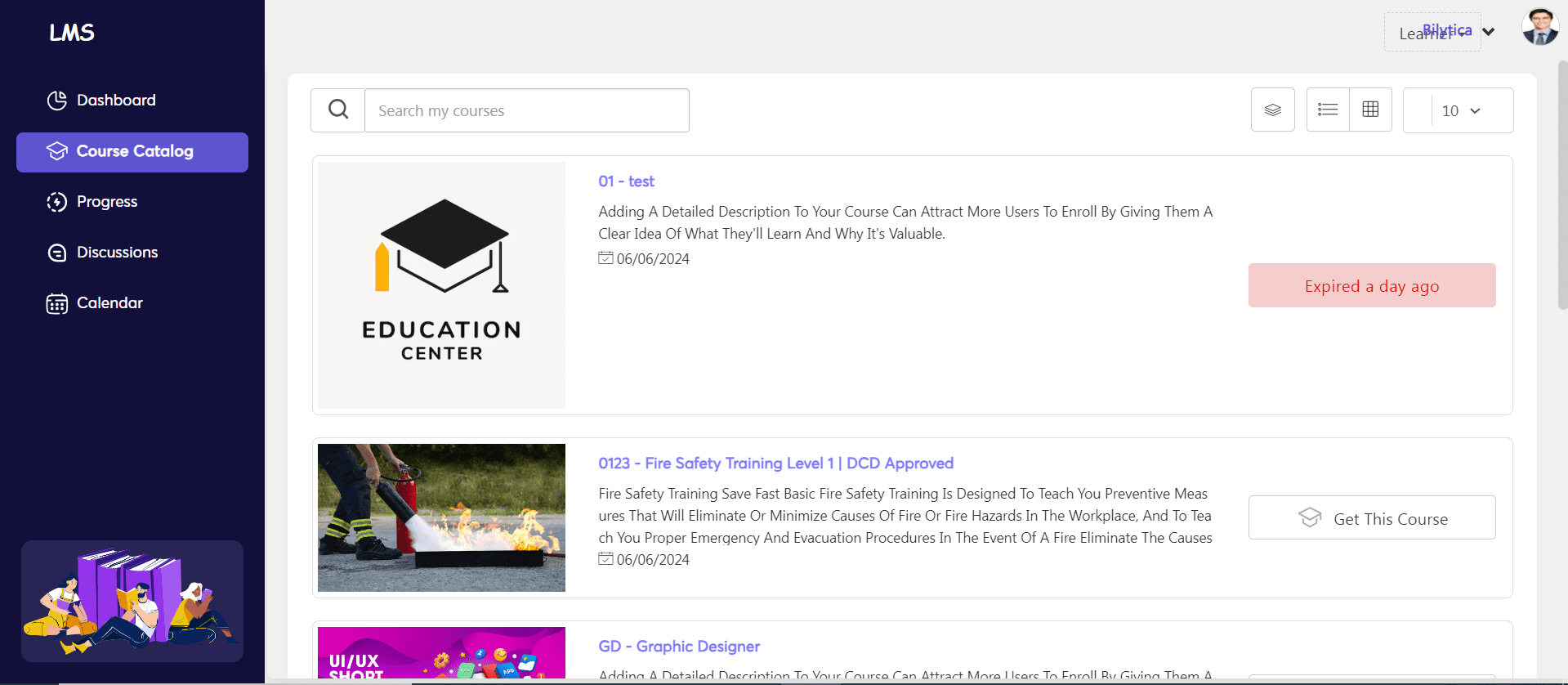
Here’s what the learner view in the course catalog typically includes:
- Course Listings: Learners see a list of available courses within the catalog, organized and categorized based on different criteria such as subject area, department, skill level, or course type.
- Course Descriptions: Each course listing includes a detailed description providing information about the course content, learning objectives, target audience, prerequisites, and any other relevant details to help learners decide if the course is suitable for them.
- Enrollment Options: Learners can easily enroll in courses directly from the course catalog by selecting the desired course and following the enrollment process. Depending on the course settings, learners may be able to self-enroll or require approval from an administrator or instructor.
- Course Availability: Learners can see the availability status of each course, indicating whether it is currently open for enrollment, scheduled for a future date, or archived. This helps learners identify courses that are relevant and accessible to them based on their needs and preferences.
What is Progress in the Learner screen?
In PayPeople LMS, “In Progress” in the learner view refers to the status of a course that a learner has started but has not yet completed. It indicates that the learner has begun working through the course content but has not finished all the required activities or modules.
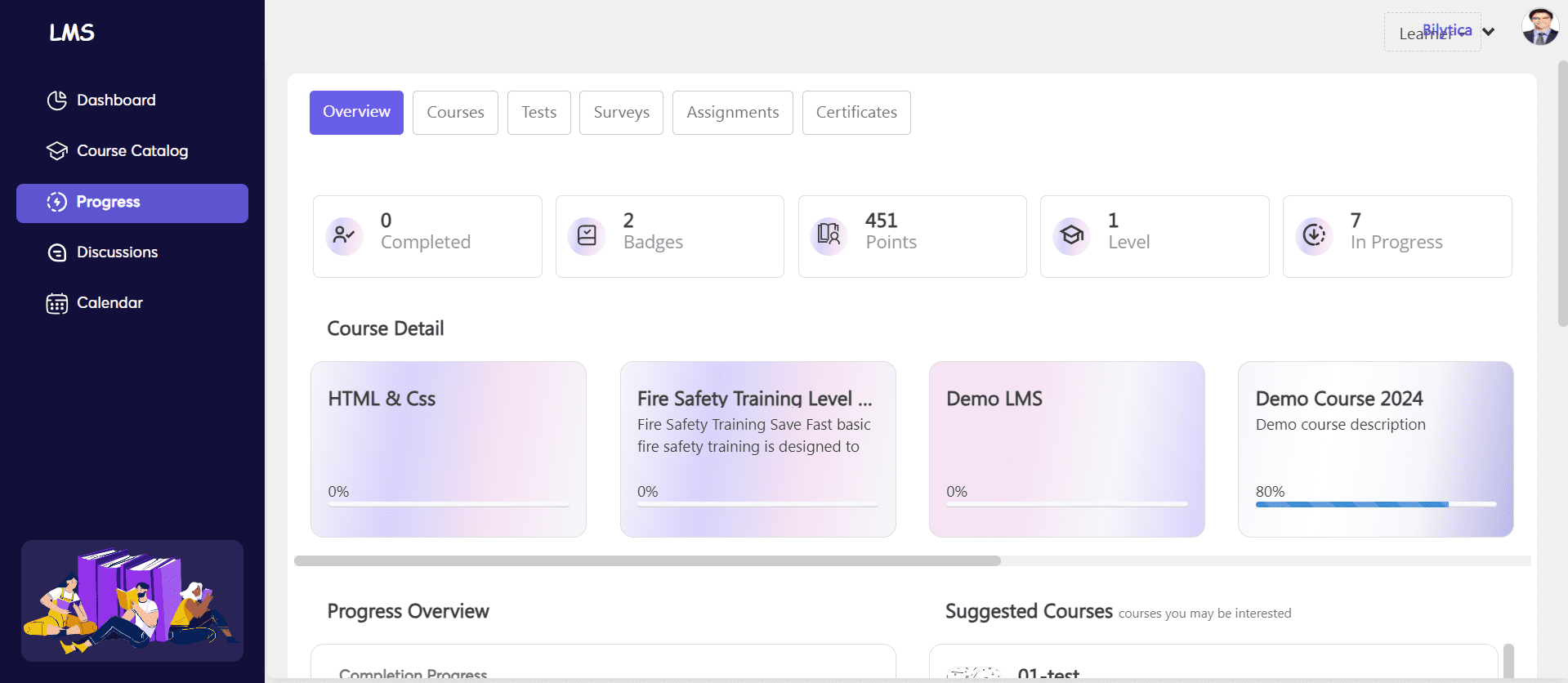
Here’s what “In Progress” typically means for learners in PayPeople LMS:
- Course Progress: When a learner accesses a course and starts working through the content, the course status changes to “In Progress.” This status is visible to the learner in their dashboard or course list.
- Partial Completion: Learners may have completed some sections or modules of the course but have not finished all the requirements. PayPeople LMS tracks their progress and updates the course status accordingly.
- Ability to Resume: Learners can typically resume their progress from where they left off within the course. PayPeople LMS saves their progress, allowing them to continue working through the remaining content at their own pace.
- Tracking and Reporting: PayPeople LMS tracks learners’ progress through courses, including the number of modules completed. This information is available to both learners and administrators for tracking and reporting purposes.
Overall, the “InProgress” status in PayPeople LMS indicates that learners are actively engaged in a course but have not yet completed all the requirements